
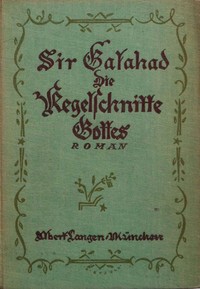
Die Kegelschnitte Gottes by Bertha Eckstein-Diener
Published in 1924, this novel feels both of its time and startlingly fresh. It follows Dr. Elsa Vogler, a rare female professor of mathematics navigating the rigid academic and social world of post-WWI Vienna. Her life is formulas and lectures until her research on conic sections—those curves like ellipses and parabolas—begins to produce results that eerily align with sacred geometry from cultures worldwide.
The Story
Elsa’s quiet life unravels as her calculations keep pointing to a single, elegant ‘source code’ behind both natural laws and humanity’s oldest spiritual art. She’s caught between colleagues who call it nonsense, a charismatic theologian who wants to claim it as proof of God, and her own relentless rational mind. The mystery isn’t just in the numbers; it’s in the pressure. Can she trust the logic that has always guided her when it leads to a conclusion that feels like magic?
Why You Should Read It
Eckstein-Diener, writing under the name Sir Galahad, wasn’t just making this up. She was a well-traveled historian and feminist thinker, and that depth shows. Elsa feels real—frustrated, brilliant, and isolated. The book isn’t a maths lesson; it’s about the awe and terror of seeing too deeply into how the world might work. It asks big questions about science and spirituality without giving easy answers, all wrapped in a page-turning personal drama.
Final Verdict
Perfect for readers who love historical fiction with a sharp intellectual edge, or anyone who enjoys a story where the central conflict happens inside a character’s mind. If you liked the vibe of ‘The Signature of All Things’ by Elizabeth Gilbert or the philosophical puzzles in Ted Chiang’s stories, you’ll find a fascinating precursor here. It’s a hidden gem that makes you think and feel, a century after it was written.
No rights are reserved for this publication. Use this text in your own projects freely.
Aiden King
1 month agoVery interesting perspective.
John Perez
1 year agoFinally a version with clear text and no errors.
Linda Thompson
2 months agoIf you enjoy this genre, the plot twists are genuinely surprising. A valuable addition to my collection.
Emma King
1 year agoAs someone who reads a lot, the pacing is just right, keeping you engaged. One of the best books I've read this year.
James Perez
1 year agoHelped me clear up some confusion on the topic.