
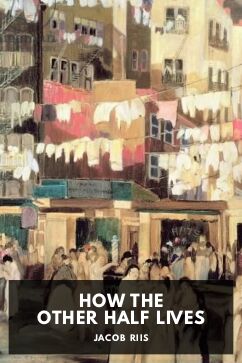
How the Other Half Lives - Jacob Riis
If you've ever walked through a big city and wondered about the lives behind the old brick buildings, this book is your time machine back to the source. Published in 1890, 'How the Other Half Lives' is journalist Jacob Riis's groundbreaking report from the front lines of urban poverty in New York City.
The Story
There isn't a traditional plot with characters. Instead, Riis acts as our guide, taking us on a shocking tour of the Lower East Side tenements. Using a new flash photography technique, he captured what words alone couldn't: families of eight in a single room, 'air shafts' filled with garbage, children playing in filthy hallways. He walks us through the different immigrant neighborhoods—Italian, Jewish, Chinese—not with cold statistics, but with stories of real people he met. He shows how the design of the buildings themselves, built for maximum profit, created disease, crime, and despair. The book builds a powerful, undeniable case that this suffering wasn't an accident; it was the direct result of neglect and greed.
Why You Should Read It
This book hits you in the gut. It's not a dry historical account. Riis's writing is urgent and angry, and his photographs are haunting. You see the faces of the people he's talking about. What struck me most was how modern it feels. The debates about housing, inequality, and immigration he describes are still happening today. Reading it connects the dots between the past and the present in a way that's both sobering and illuminating. It's the origin story of urban reform and photojournalism rolled into one.
Final Verdict
This is a must-read for anyone interested in cities, social justice, photography, or American history. It's perfect for readers who love narrative non-fiction that packs a punch. Be warned: it's not a light read. The conditions described are harsh, and some of Riis's cultural observations are products of their time. But that's part of its power—it's an unfiltered, foundational document. It will make you look at the sidewalk beneath your feet and the history in the bricks around you completely differently.
This digital edition is based on a public domain text. Enjoy reading and sharing without restrictions.
Patricia Miller
3 weeks agoWithout a doubt, the storytelling feels authentic and emotionally grounded. Thanks for sharing this review.
William Flores
1 year agoVery helpful, thanks.
Logan Lewis
1 year agoRead this on my tablet, looks great.









Sandra Lopez
1 year agoNot bad at all.