
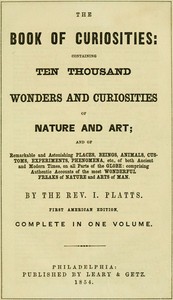
The Book of Curiosities by John Platts
Forget everything you know about modern non-fiction. 'The Book of Curiosities' isn't a narrative; it's an experience. Published in the early 1800s by John Platts, it's a sprawling, single-volume attempt to explain... well, everything interesting. The 'plot' is the journey of human knowledge itself, organized into hundreds of short entries.
The Story
There's no main character or conflict here. Instead, you open the book and are immediately swept into a world of questions and answers from two centuries ago. The entries jump from astronomy to zoology, from the science of volcanoes to descriptions of ancient ruins. It explains optical illusions, details the process of making glass, and recounts historical anecdotes about famous figures. The 'story' is the unfolding of a pre-industrial worldview, where magic was fading but science was still full of mystery and wonder.
Why You Should Read It
Reading this feels like having a conversation with a brilliantly curious, slightly eccentric great-great-grandfather. The charm isn't in getting facts right by today's standards—we've learned a lot since 1830!—but in seeing how people thought. The explanations are sometimes wrong, often poetic, and always earnest. You get a real sense of the hunger for knowledge in an age without instant answers. It’s humbling and hilarious by turns, and it makes you appreciate both how far we've come and the timeless nature of human curiosity.
Final Verdict
This is a book for the naturally curious, the history lover, and the fan of all things vintage. It's perfect for dipping into for five minutes at a time, always guaranteed to show you something strange. If you enjoy old maps, browsing Wikipedia at 2 a.m., or the vibe of a dusty antique shop, you'll find a friend in this book. Just don't use it to study for your science exam.
This historical work is free of copyright protections. Preserving history for future generations.
Lucas Hernandez
1 year agoNot bad at all.
Jennifer Clark
9 months agoWithout a doubt, the emotional weight of the story is balanced perfectly. Exactly what I needed.