
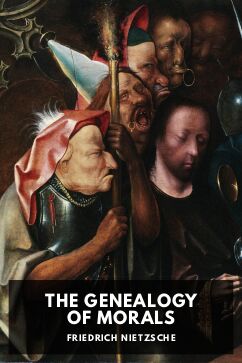
The Genealogy of Morals - Friedrich Nietzsche
Forget everything you think you know about where morality comes from. Friedrich Nietzsche's The Genealogy of Morals isn't a dry lecture. It's a fierce, provocative investigation into the history of our most basic values.
The Story
There's no plot in the traditional sense. Instead, Nietzsche acts as a kind of philosophical archaeologist. He digs through language, history, and psychology to unearth the origins of good, evil, guilt, and bad conscience. His main argument is explosive: our morals didn't fall from heaven. They were invented in a war between two types of people. First, the 'masters'—strong, proud, warrior-types—called themselves 'good.' Their opposites, the weaker folks, were simply 'bad.'
Then, Nietzsche says, the weak pulled off history's greatest rebellion. Led by priestly types, they flipped the values. They called their own weakness 'good' (think humility, pity, obedience) and labeled the masters' strength 'evil' (pride, conquest, passion). This 'slave revolt in morality' used guilt and the promise of heavenly reward to tame the strong. The book traces how this internalized struggle created the modern human—a creature burdened by guilt, addicted to punishing itself, and often hostile to its own natural instincts.
Why You Should Read It
You should read this because it's genuinely mind-bending. Even if you disagree with every conclusion (and many do), the questions are irresistible. Nietzsche forces you to look at your own beliefs as historical artifacts, not eternal truths. Why do we feel guilty about things that hurt no one? Why do we often distrust successful, powerful people? His ideas are everywhere in modern culture, from psychology to political debates. Reading him is like getting the source code for a lot of our social programming. It's challenging, sometimes uncomfortable, but never boring. He writes with a fiery, poetic intensity that makes abstract ideas feel urgent and personal.
Final Verdict
This book is perfect for curious readers who enjoy big, disruptive ideas and don't need easy answers. It's for anyone who has ever questioned why society works the way it does. It's not for readers seeking spiritual comfort or a straightforward guide to ethics. Come with an open mind, a critical eye, and be ready to argue with the page. Think of it as a strenuous, rewarding workout for your brain. You might not agree with the trainer, but you'll leave stronger.
The copyright for this book has expired, making it public property. It serves as a testament to our shared literary heritage.
Dorothy Flores
1 year agoAfter finishing this book, the atmosphere created is totally immersive. Exceeded all my expectations.
Mason Garcia
6 months agoCitation worthy content.
Nancy King
1 year agoAfter finishing this book, it provides a comprehensive overview perfect for everyone. Absolutely essential reading.






Christopher Jones
1 year agoPerfect.